
Hillsborough County Demolition Permit Guide
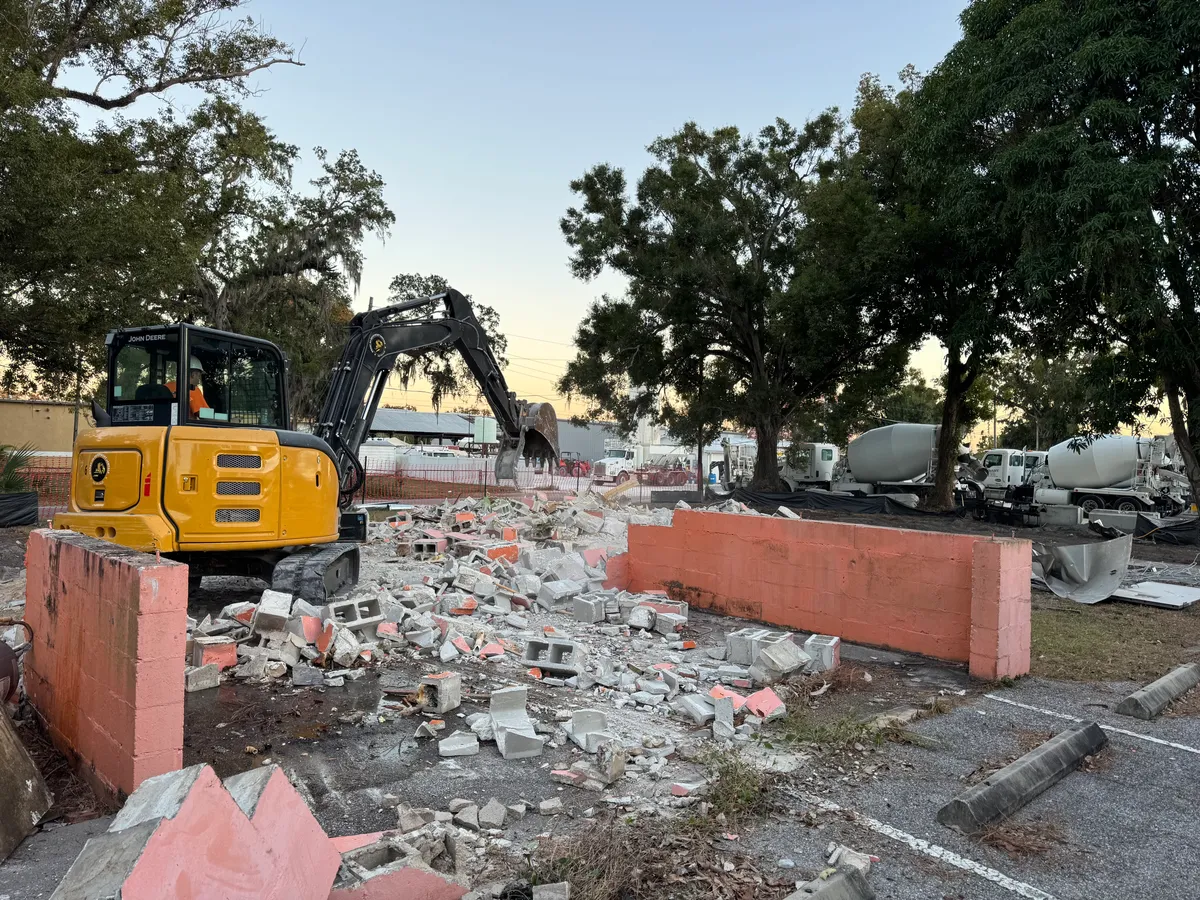
Every demolition in Hillsborough County needs a permit - a 1962 frame house in Seminole Heights, a doublewide in Lutz, a detached garage in Brandon. The first question is not what does it cost, it's which department issues it. Properties inside Tampa city limits go through City of Tampa Construction Services. Everything in unincorporated Hillsborough goes through Hillsborough County Building Services. Different fee schedules, different review queues, and a tree ordinance that catches applicants who never thought about it. This guide walks through both.
Step Zero: County or City?
A Tampa mailing address does not mean a Tampa jurisdiction. Large stretches of Carrollwood, Town 'N' Country, Brandon, Riverview, Lutz, and Citrus Park carry Tampa ZIP codes but sit in unincorporated Hillsborough County. Check the parcel on the Property Appraiser's record before you file anything - submitting to the wrong department costs you the full review window.
Quick Rule of Thumb
- Inside Tampa city limits (South Tampa, Seminole Heights, Tampa Heights, Ybor, New Tampa): City of Tampa Construction Services.
- Unincorporated Hillsborough (Brandon, Riverview, Lutz, Valrico, Apollo Beach, Ruskin): Hillsborough County Building Services.
- Plant City and Temple Terrace run their own building departments - confirm before you file.
When You Need a Demolition Permit
A permit is required for essentially any structure removal:
- Removing a single-family residence, mobile home, or manufactured home
- Demolishing a detached garage, barn, carport, or accessory structure
- Removing an in-ground swimming pool
- Tearing down any commercial or agricultural building
- Partial demolition that affects load-bearing walls
Small sheds, fences, and detached deck removal generally fall below the threshold, but thresholds vary by zoning district. A five-minute call to the building department before you assume is cheaper than a stop-work order.
Documents You'll Need
A complete Hillsborough demolition application includes:
- Permit application with property address, parcel ID, and folio number
- Owner authorization if the applicant is not the property owner (notarized)
- Site plan showing the structure being demolished, property lines, setbacks, and structures remaining
- Asbestos survey report where one applies - it is not triggered by build year alone; see the environmental note below
- Tree survey or tree-protection plan if protected trees sit inside the work zone (see below - this is the Hillsborough-specific one)
- Septic abandonment certificate if the property is served by septic rather than sewer
- Utility disconnection letters from TECO, Peoples Gas, and the applicable water/sewer utility
- Contractor license for the demolition contractor, or a notarized owner-builder affidavit
When an Asbestos Survey Actually Applies
"Every pre-1980 building needs an asbestos survey" is the version of this rule that gets repeated most often, and it is not what the rule says. The federal asbestos NESHAP rule - administered in Florida by the Department of Environmental Protection - requires an inspection for asbestos-containing material and an advance written notification before a regulated facility is demolished. Age is not the trigger; what the structure is, and what the project is, are.
- Residential buildings with four or fewer dwelling units are generally outside that definition, so an isolated single-family house or a single mobile home usually falls outside it too - regardless of build year.
- That exclusion goes away when the structure is part of an installation with more than four units, or part of a larger demolition or renovation project, or when some other rule brings it in.
- Commercial, industrial, institutional and multi-unit buildings are covered regardless of age.
- The building department and the landfill can still ask. A survey that is not federally required can still be a condition of your permit or of debris acceptance, and it is the only way to actually know what is in an older structure.
Lead is a separate question with a separate answer. EPA's Renovation, Repair and Painting (RRP) rule covers renovation, repair and painting work in pre-1978 housing and child-occupied facilities - it does not apply to a total demolition. That does not make lead paint irrelevant on a teardown; dust control and disposal at a permitted facility still matter. It just means "RRP" is not the reason.
We confirm the requirement with the department issuing the permit on every job rather than assuming either way, and coordinate testing and licensed abatement when it applies.
What a Hillsborough Demolition Permit Costs
Permit fees are set by the jurisdiction, calculated from the project's own details, and revised from time to time - so the only number worth relying on for your parcel is the one the building department quotes you. Ask for it in writing before you sign anything.
- Unincorporated Hillsborough: Hillsborough County Building Services publishes the current demolition permit fee schedule.
- Inside Tampa city limits: City of Tampa Construction Services publishes its own, and it is not the same schedule.
- Mobile and manufactured homes: usually a separate, lower-cost permit type - confirm which one applies to your unit.
- Everything alongside it - asbestos survey or abatement, septic abandonment, well plugging - is priced by the licensed vendor or agency that performs it, not by the county.
One thing to watch on quotes: many contractors mark up the permit for the time spent at the building department. That is a legitimate charge - but it should be a line item. If a quote says "permits included" with no number, ask for the breakout.
Review Timeline
Neither department guarantees a review time, and published targets change - ask the one handling your parcel for its current target when you file. What is reliably true: a complete first submission is the single biggest schedule lever you control, an incomplete one restarts the clock, and a demolition on septic also waits on a health-department inspection that runs on its own schedule.
Permit review is only one phase. From contract signature to a closed demolition permit, the review, any environmental testing, and the utility disconnects can all run in parallel - the demolition itself is usually the shortest part of the project. See our full demolition timeline breakdown for where the weeks actually go.
Tree Protection - The Hillsborough Trap
This is where Hillsborough differs most from Pasco. The county's tree ordinance is keyed to what the parcel is, not only to how big the tree is, and demolition work zones routinely contain protected trees. Trunk diameter is measured 4.5 feet above the ground (DBH).
| Parcel | Permit generally required to remove a protected tree |
|---|---|
| Developed residential property (a principal dwelling already on it) | 12 inches DBH and larger |
| Vacant residential property, including a lot being cleared for a new home | Over 5 inches DBH |
| Grand trees | Additional review, and the expedited path is not available for grand oaks |
The county's published tree removal application fee is $81.65 for parcels up to 5 acres, plus $24.93 for each acre over 5. Removing or damaging a protected tree without a permit is a code enforcement matter with its own penalties, and replacement or mitigation planting can be required on top of them. Inside City of Tampa limits a separate city ordinance applies, so confirm which one governs the parcel. Thresholds, exemptions and fees all change - verify the current rule with Hillsborough County before anything comes down. Full detail on the county ordinance, wetland buffers, and protected species lives in our Hillsborough land clearing permit guide.
Septic Abandonment - Only If You're Not on Sewer
Unlike Pasco, much of Hillsborough is on public sewer, so septic abandonment comes up sometimes rather than always. When it does apply, it is non-negotiable: the county requires a septic tank abandonment certificate before the demolition permit can close, and health code will not let you skip it.
The abandonment is a short piece of field work (pump the tank, crush or remove the lid, backfill to grade) followed by a health department inspection that runs on the health department's schedule, not yours. Private wells are rarer still in Hillsborough than in Pasco, but if the parcel has one, plugging by a Florida-licensed water well contractor is required before the permit closes. Both are quoted by the licensed vendor doing the work.
Utility Disconnects and Their Lead Times
Demolition cannot begin until utilities are physically disconnected at the structure. File these the same week you file the permit:
- TECO (electric, City of Tampa and most of Hillsborough): 5-10 business days from request
- Peoples Gas / TECO Peoples Gas: 3-7 business days
- City of Tampa Water / Hillsborough County Public Utilities: 3-7 business days
- Cable and fiber (Spectrum, Frontier): usually homeowner-initiated, 7-14 days
Hillsborough vs. City of Tampa vs. Pasco
| Item | Hillsborough County | City of Tampa | Pasco County |
|---|---|---|---|
| Issuing department | Building Services | Construction Services | Building Construction Services |
| Permit fee (residential) | Published county schedule | Published city schedule (different) | Published county schedule (different again) |
| Review time (residential) | Ask the department; not guaranteed | Ask the department; not guaranteed | Ask the department; not guaranteed |
| Tree protection plan required? | Yes if a protected tree is in the work zone - 12 in DBH developed, over 5 in vacant | Yes - separate city ordinance | Yes if a protected tree is in the work zone |
| Septic abandonment common? | Sometimes - many lots on sewer | Rarely - city sewer | Yes - most rural/suburban lots |
| Well plug common? | Sometimes | Rarely | Yes |
Common Reasons Demolition Permits Get Rejected
These come up regularly. They are listed in no particular order - we have no data on which is most frequent countywide.
- Missing environmental documentation when the structure or the project is one the survey and notification rules cover
- No tree survey when a protected tree sits in or beside the work zone
- Incomplete site plan - usually missing setback dimensions or accessory structures
- Missing utility disconnect letters
- Owner-builder affidavit without a notary stamp
- Septic abandonment not filed in parallel - the demolition permit cannot close without the certificate
- Filed with the wrong jurisdiction - a Tampa ZIP code on an unincorporated parcel
Returned submissions reset the review clock, and on a project where the demolition itself is a couple of days, one rejected submission can be the difference between demolishing this month and next.
Can I Pull the Permit Myself?
Yes. Florida law allows owner-builders to pull demolition permits on their own primary residence. The owner-builder affidavit has to be notarized and submitted with the application, and you remain responsible for every permit condition: asbestos abatement, tree protection, septic abandonment, utility disconnects, and final inspection. Owner-builders also cannot sell or rent the property within one year of pulling the permit without disclosing that the work was done under an owner-builder exemption.
Pro Tip: Walk the Tree Line Before You Draw the Site Plan
Measure the DBH of every tree near the structure before the site plan gets drawn. A grand oak discovered by a plan reviewer means additional review, a possible replacement or mitigation obligation, and a reset review clock. The same oak identified up front usually means a protection fence and a note on the plan. Same tree, very different schedule.