
Pasco County Demolition Permit Guide
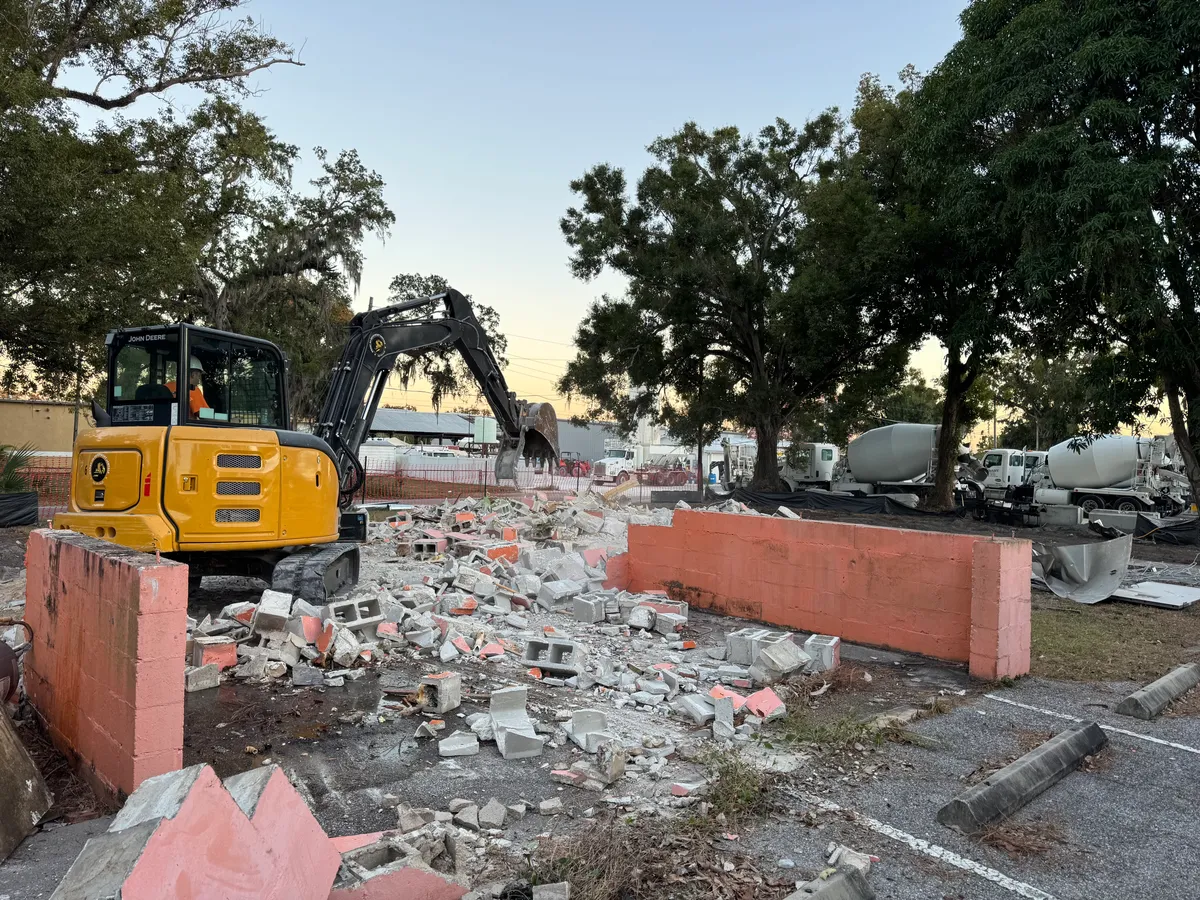
Pasco County has grown fast and demolition activity has followed - mobile homes coming down across Land O' Lakes, dated 1980s ranches being torn down in Wesley Chapel for new builds, and rural acreage being cleared along SR-52 and US-41. Every one of those projects requires a permit through Pasco County Building Construction Services. This guide walks through exactly what's required, what it costs, how long it takes, and the line items that catch first-time applicants by surprise.
When You Need a Pasco Demolition Permit
Pasco County requires a demolition permit for any of the following:
- Removing a single-family residence, mobile home, or manufactured home
- Demolishing a detached garage, barn, or accessory structure above the size the zoning district exempts
- Removing an in-ground swimming pool
- Tearing down any commercial or agricultural building
- Partial demolition that affects load-bearing walls
Small sheds, fences, and detached deck removal often fall below the permit threshold, but the threshold itself varies by zoning district - a short call to Building Construction Services before you assume is cheaper than a stop-work order.
Documents You'll Need
A complete Pasco demolition permit application includes:
- Permit application form with property address, parcel ID (PID), and folio number
- Owner authorization if the applicant is not the property owner (notarized)
- Site plan showing the structure being demolished, property lines, setbacks, and any structures remaining
- Asbestos survey report where one applies - it is not triggered by build year alone; see the environmental note below
- Septic abandonment permit (separate, through Florida Department of Health - Pasco) if the property has a septic system
- Well plugging certification by a licensed water well contractor if the property has a private well
- Utility disconnection letters from Duke Energy, Withlacoochee River Electric, TECO, or Pasco County Utilities (whichever applies)
- Contractor license for the demolition contractor (or owner-builder affidavit)
When an Asbestos Survey Actually Applies
"Every pre-1980 building needs an asbestos survey" gets repeated a lot, including by contractors, and it is not what the rule says. The federal asbestos NESHAP rule - administered in Florida by the Department of Environmental Protection - requires an inspection for asbestos-containing material and an advance written notification before a regulated facility is demolished. Age is not the trigger; what the structure is, and what the project is, are.
- Residential buildings with four or fewer dwelling units are generally outside that definition, so an isolated single-family house or a single mobile home usually falls outside it too - regardless of build year.
- That exclusion goes away when the structure is part of an installation with more than four units, or part of a larger demolition or renovation project, or when another rule brings it in.
- Commercial, industrial, institutional and multi-unit buildings are covered regardless of age.
- The building department and the landfill can still ask. A survey that is not federally required can still be a condition of your permit or of debris acceptance, and it is the only way to actually know what is in an older structure.
Lead is a separate question with a separate answer. EPA's Renovation, Repair and Painting (RRP) rule covers renovation, repair and painting in pre-1978 housing and child-occupied facilities - it does not apply to a total demolition. Dust control and disposal at a permitted facility still matter on a teardown; "RRP" is just not the reason.
We confirm the requirement with the department issuing the permit on every job rather than assuming either way, and coordinate testing and licensed abatement when it applies.
What a Pasco Demolition Permit Costs
Pasco calculates the permit fee from the project's own details, and the published schedule is revised from time to time, so the only reliable number for your parcel is the one the county quotes you. Contact Pasco County Building Construction Services with your parcel ID and ask for it in writing before you sign anything.
- The demolition permit itself is set by the county's current fee schedule; residential, commercial and mobile-home demolition are typically separate categories.
- The septic abandonment permit is a separate application to the Florida Department of Health in Pasco County, with its own fee.
- Well plugging and any asbestos survey or abatement are quoted by the licensed contractor or lab doing the work, not by the county.
If a demolition quote says "permits included" with no number, ask for the breakout. A contractor charging for the time spent at the permitting office is legitimate - it just belongs on its own line.
Review Timeline
Pasco publishes review targets that change over time and does not guarantee them, so ask Building Construction Services for the current target when you file rather than planning around a number you read somewhere. A few things are dependable regardless:
- A complete first submission is the single biggest schedule lever you control. Submissions returned for missing documents reset the clock.
- Mobile and manufactured home demolition is usually the quickest category; commercial is usually the slowest.
- If the property has septic or a private well, those run as separate approvals on their own schedules and the demolition permit cannot close until they land.
Septic Abandonment - The Step Most People Forget
Most Pasco properties outside of incorporated cities (Dade City, New Port Richey, Zephyrhills, etc.) are on private septic. Florida Department of Health - Pasco County Environmental Health requires a separate septic system abandonment permit before demolition can be inspected as complete.
The abandonment process:
- Pump the tank dry through a licensed septic hauler
- Crush or remove the tank lid
- Backfill the tank with clean fill material to grade
- DOH-Pasco field inspection to verify abandonment
- Receive the abandonment certificate, which the county building department needs before signing off on the demolition
The licensed contractor doing the work quotes the price. Skipping the step means the demolition permit cannot close, which means you cannot pull a building permit on the same lot for the new structure.
Well Plugging - Required for Properties on Private Well
Properties served by a private well need the well plugged and certified by a Florida-licensed water well contractor before demolition closes. Florida statute requires this regardless of whether the new structure will use the same well - a partially demolished site with an open well casing is a code violation and a groundwater contamination risk.
Cost depends on depth and casing type and is quoted by the licensed water well contractor. The contractor files the abandonment/completion paperwork with the Southwest Florida Water Management District (SWFWMD), and that confirmation goes into the demolition permit packet.
Common Reasons Pasco Demolition Permits Get Rejected
These come up regularly. They are listed in no particular order - we have no data on which is most frequent countywide.
- Missing environmental documentation when the structure or the project is one the survey and notification rules cover
- Incomplete site plan - usually missing setback dimensions or accessory structures
- No utility disconnect letters from the relevant providers
- Owner-builder affidavit missing notary stamp when owner is acting as their own contractor
- Septic abandonment permit not pulled in parallel - demolition permit cannot close without it
- Unpaid prior code enforcement liens on the parcel
- Tree removal triggers when protected trees are within the work zone and a tree removal permit was not pulled separately
Pasco vs. Hillsborough vs. City of Tampa
If you've pulled a demolition permit before in Hillsborough County or City of Tampa, here's how Pasco differs:
| Item | Pasco County | Hillsborough County | City of Tampa |
|---|---|---|---|
| Permit fee (residential) | Published county schedule | Published county schedule (different) | Published city schedule (different again) |
| Review time (residential) | Ask the department; not guaranteed | Ask the department; not guaranteed | Ask the department; not guaranteed |
| Tree protection plan required? | Yes if a protected tree is in the work zone | Yes if a protected tree is in the work zone - 12 in DBH developed, over 5 in vacant | Yes - separate city ordinance |
| Common septic abandonment | Yes - most rural/suburban lots | Sometimes - many on sewer | Rarely - city sewer |
| Well plug common? | Yes | Sometimes | Rarely |
How to Submit
Pasco handles most building permits through the county's online permitting portal, with in-person submission available at county permitting offices. Office locations, hours and appointment rules change, so check the county's building services page before you drive anywhere.
- Create or log into an account on the county's permitting portal
- Select "New Permit" then "Demolition"
- Enter the parcel ID and folio number
- Upload the site plan, asbestos survey, utility letters, and contractor license
- Pay the application fee through the portal
- Track review status in the portal and respond to reviewer comments promptly - applications expire if they sit unanswered, and the county sets that window
- Once issued, print the permit and post it in a visible location at the property before demolition begins
Pro Tip: Pull Septic and Demo Permits in Parallel
If your property has septic, file the DOH-Pasco septic abandonment permit on the same day you submit the building demolition permit. The septic approval routinely takes longer than the demolition permit itself, and demolition cannot close until the septic certificate is in hand. Running them in parallel instead of back to back is the cheapest schedule win on the whole project.