
Concrete Demolition in Gibsonton, FL
Driveway, patio, and slab removal for Gibsonton's vintage mobile homes from the 1950s through 1980s on narrow lots along US-41 and its side streets
Get a Free EstimateGibsonton Concrete Removal Experts
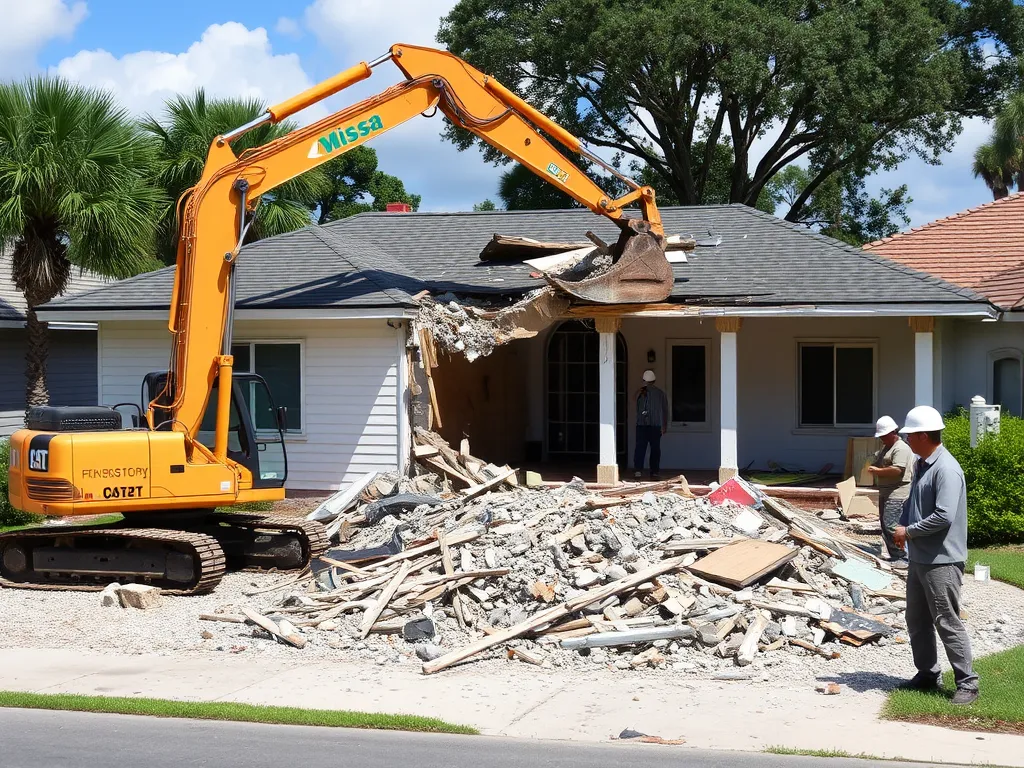
Concrete demolition is flatwork removal, not building teardown: the cracked driveway, the settling patio, the walkway that heaved, the slab left behind after a shed or structure came down. Gibsonton sits within the historic "Gibtown" community along US-41 in south Hillsborough County — known for decades as the winter home of carnival and sideshow workers, with mobile homes dating to the 1950s through 1980s across the 33534 zip code, and the properties here run to vintage mobile homes from the 1950s through 1980s on narrow lots along US-41 and its side streets, waterfront and near-water properties along the Alafia River, and East Bay Road parcels transitioning from mobile homes to site-built development — which is exactly the mix where decades-old concrete is due to come out before something better goes in.
Scope covers concrete driveway and patio removal, sidewalk and curb demolition, building foundation and slab demolition, concrete block and poured retaining wall removal, and pool shell breaking. Site grading after the concrete is out is part of the same trade — the job is not done when the slab is gone, it is done when the ground it occupied is ready for what comes next.
The equipment is chosen for precision, not just force. Hydraulic breakers and saw cutting take out the target concrete while protecting adjacent structures, landscaping, and underground utilities — which matters most on partial removals, where the section that stays has to survive the removal of the section that goes.
Permitting depends on what the concrete is attached to. When removal is part of a larger project — a house teardown, a pool removal — it is covered under that project's demolition permit, filed with Hillsborough County Building Services for all of Gibsonton (unincorporated). Whether a free-standing driveway or patio slab needs its own permit varies by jurisdiction and scope, so we confirm the requirement with the permit office before work begins rather than assume the answer.
Most of what we break out never sees a landfill. Demolished concrete is separated from other debris and hauled to recycling facilities, where it is crushed into aggregate for road base, fill material, and new concrete — and that recycling route often reduces disposal costs. We are about 35-45 minutes from our Land O' Lakes yard via I-75, so a free on-site estimate for your Gibsonton project is a quick visit, not a scheduling project.
Frequently Asked Questions
How much does concrete removal cost in Gibsonton?
The price tracks the concrete itself: thickness, whether it is reinforced with rebar, how accessible it is for equipment, and how much material has to be hauled and disposed of. A thin unreinforced patio and a thick reinforced foundation are very different jobs even at the same square footage. We provide free on-site estimates in Gibsonton so the number reflects your actual slab, not a guess.
Do I need a permit to remove a driveway or patio in Gibsonton?
It depends on the scope. Concrete removal that is part of a larger demolition — a house teardown or a pool removal — is covered under that project's permit, filed with Hillsborough County Building Services for all of Gibsonton (unincorporated). Whether a free-standing slab, driveway, or patio needs its own permit varies by jurisdiction, so we confirm the requirement with the permit office before any work begins.
What happens to the concrete after it is removed?
Most concrete is recyclable. We separate demolished concrete from other materials and transport it to recycling facilities, where it is crushed into aggregate used for road base, fill material, and new concrete production. That keeps material out of landfills and often reduces the disposal cost on your Gibsonton project.
Can you remove part of a slab or driveway without damaging the rest?
Yes. We use precision equipment — hydraulic breakers and saw cutting — to remove the target section while protecting adjacent structures, landscaping, and underground utilities. Saw cutting is what makes a partial removal clean: the section that stays keeps a straight, sound edge instead of a fractured one.
Ready to Get That Concrete Out in Gibsonton?
Get a free estimate for your concrete removal project
Get a Free Quote