
Pool Removal Cost in Tampa (2026 Price Guide)
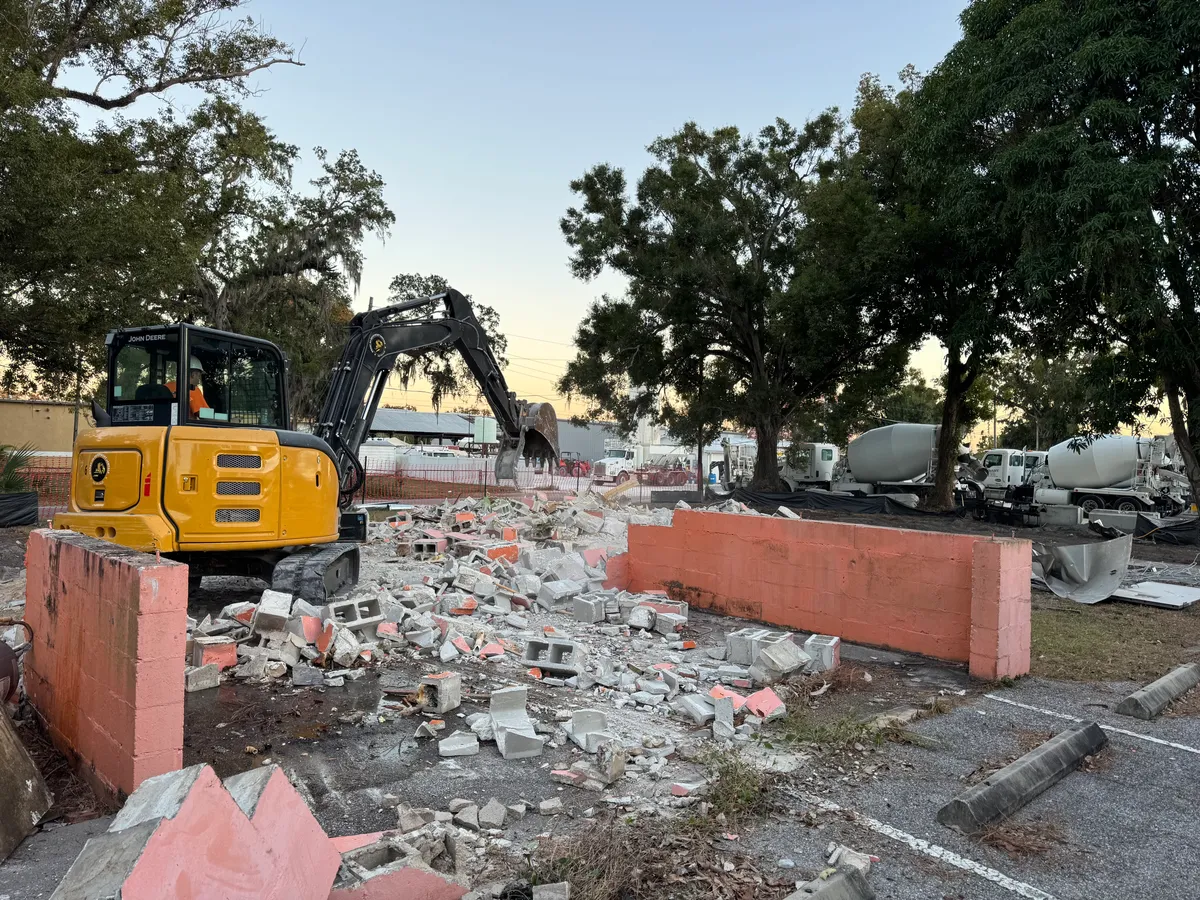
In-ground pools were a Tampa Bay selling point for 50 years. They're now increasingly a liability - aging gunite shells, $5,000-$10,000/year maintenance bills, climbing pool insurance, and lots that buyers prefer for outdoor living, garden, or addition space. If you're tired of the pool, you have two real options: full removal (everything out, lot restored to grade) or partial removal (also called "fill-in" or "abandonment"). This guide covers what each costs in Tampa Bay in 2026, the trade-offs, and the disclosure rules that matter when you eventually sell the house.
Full vs. Partial Pool Removal
Full removal means the entire pool shell, plumbing, electrical, and equipment pad come out. The hole is backfilled with engineered fill, compacted in lifts, and graded to match surrounding grade. The lot is buildable for a new structure or any landscaping use.
Partial removal means the pool shell is broken up into a few feet of rubble, drainage holes are punched through the bottom, and the cavity is filled with the rubble plus clean fill. It's faster and cheaper, but the lot is permanently classified as having a buried pool and must be disclosed at sale - and the area is not buildable for a new structure.
2026 Tampa Bay Pool Removal Price Ranges
- Partial removal (gunite, average residential): $5,500 - $9,500
- Partial removal (fiberglass or vinyl): $4,000 - $7,500
- Full removal (gunite, average residential): $11,000 - $19,000
- Full removal (fiberglass): $8,500 - $14,000
- Full removal (vinyl liner): $7,500 - $12,500
- Pool deck removal add-on (concrete): $3 - $7 per sq ft
- Pool screen / cage removal: $1,500 - $4,000
- Equipment pad and plumbing removal: $400 - $1,000
- Tight-access surcharge (no rear-yard access): +$1,500 - $4,000
Pricing assumes a typical residential pool (12-by-24 to 16-by-32) on a Tampa Bay lot with reasonable rear-yard access. Tight-access lots in South Tampa, Hyde Park, and older Seminole Heights properties run higher.
What Drives the Price
Pool Type
Most Tampa Bay pools are gunite/concrete. They're the heaviest and most expensive to demolish but also the most common - reinforced concrete shells with steel rebar that require track-mounted machines to break up. Fiberglass and vinyl pools come out faster: fiberglass shells lift out as pieces, and vinyl liners are essentially a thin shell over a packed-earth bowl.
Pool Size and Depth
A standard 14-by-28 pool with a 5 ft deep end produces about 50-70 yards of debris if fully demolished. Larger pools (16-by-36+) or pools with diving wells (8-10 ft deep) produce 80-120+ yards. Debris hauling at $55-$75 per ton scales linearly with pool volume.
Site Access
This is the single biggest cost variable. Pool removal requires a track machine in the rear yard and dump trucks at the curb. If the side yard has less than 8 ft of clearance, the demolition machine cannot pass the house. Options:
- Remove a section of fence (homeowner-restored after, or contractor restores at extra cost)
- Use a smaller mini-excavator (slower, more days, higher labor cost)
- Cross the neighbor's yard with their permission (rare in Tampa, but possible on corner lots)
- Crane-lift debris to the front (rare, expensive, $3,000-$8,000 added)
South Tampa lots with 6-7 ft side yards routinely add $2,000-$4,000 over the published quote.
Pool Deck and Screen Cage
Most Tampa Bay pools have a concrete pool deck and a screen enclosure. Decisions here drive 30-50% of total cost on smaller pools:
- Keep the deck: Saves $2,500-$4,000. The deck stays as patio space; only the pool hole is filled.
- Remove deck and screen: Adds $4,000-$8,000 but gives you a clean buildable backyard.
- Keep deck, remove screen: Common compromise; saves on deck removal but loses the screened-room functionality.
Permits
Pool removal requires a demolition permit in every Tampa Bay jurisdiction:
- City of Tampa: $175-$300 permit, 7-14 day review
- Hillsborough County (unincorporated): $150-$275, 5-10 day review
- Pasco County: $175-$275, 5-10 day review
- Pinellas County: $175-$300, 7-14 day review
Most jurisdictions also require an engineered backfill specification and post-fill compaction testing if the pool is in a future buildable area. Compaction testing runs $400-$800.
Disclosure: This Matters at Sale
Florida real estate disclosure requires sellers to inform buyers of any partially-removed pool. The form mentions "abandoned pool" or "buried pool" - that disclosure typically reduces buyer pool depending on the buyer's plans:
- Buyers planning a new pool: Indifferent. They'll re-excavate either way.
- Buyers planning landscaping or play space: Generally fine with partial removal as long as backfill was engineered fill.
- Buyers planning an addition: Usually a deal-breaker. Most lenders won't finance new construction over a partially-removed pool, and the area would need to be re-excavated and re-engineered.
- Cash buyers (investors, builders): May discount the offer 1-3% for the disclosed pool, or insist on full removal as a closing condition.
If you're 5+ years from selling and not planning a buildable structure on the pool footprint, partial removal is usually fine. If you might sell within 2-3 years or might add square footage, full removal pays for itself.
Typical Tampa Bay Project Timeline
- Site visit and quote: 1-3 days
- Permit application + review: 5-14 business days
- Pool drainage: 1-3 days (drain to sanitary sewer per local utility rules; pool chemicals must be neutralized first)
- Equipment + plumbing demo: 1 day
- Shell demolition (gunite full removal): 2-4 days
- Backfill + compaction (if buildable): 2-3 days for engineered lifts
- Final grade and inspection: 1-2 days
- Total typical timeline: 3-5 weeks
Common Hidden Costs
- Pool drainage fees: Most Tampa Bay utilities require water be drained to the sanitary sewer (not storm), with chlorine neutralized to under 0.1 ppm. Some utilities charge a discharge permit fee ($50-$150).
- Engineered fill specification: $400-$1,200 if your jurisdiction requires it (usually only for future buildable areas).
- Compaction testing: $400-$800 for partial removal in a future buildable area.
- Tree root damage to the pool deck: If decking has been heaved by tree roots, removal can require additional root pruning ($300-$800).
- Old plumbing surprises: 1980s and earlier pools sometimes have polybutylene supply lines or buried equipment pads that surface during demo.
- Sod and irrigation restoration: Most contractors finish to bare graded earth. Re-sodding the disturbed area is usually $0.75-$1.50 per sq ft separate.
When Partial vs. Full Makes Sense
| Your Situation | Best Option |
|---|---|
| Selling within 1-2 years and pool is currently functional but you want it gone for marketability | Full removal - eliminates disclosure |
| Long-term home, no plans to add square footage on the pool footprint | Partial removal - 50% cheaper, no functional difference |
| Planning a future addition or ADU on the pool footprint | Full removal - new structure cannot sit on partial fill |
| Investment property, want to maximize curb appeal at minimum cost | Partial removal - lowest cost, document the engineered fill |
| Aging concrete shell with active leaks contaminating yard | Full removal - leaking shell is a buyer red flag |
Pro Tip: Decide Deck Now, Not Later
Removing the pool deck and screen cage is dramatically cheaper while the demolition crew is on-site than booking it as a separate project later. Mobilization fees alone cost $500-$1,200 per visit. Decide whether you want a clean buildable backyard or a kept-deck patio space before the contract is signed.