
Land Clearing vs. Grading: What's the Difference?
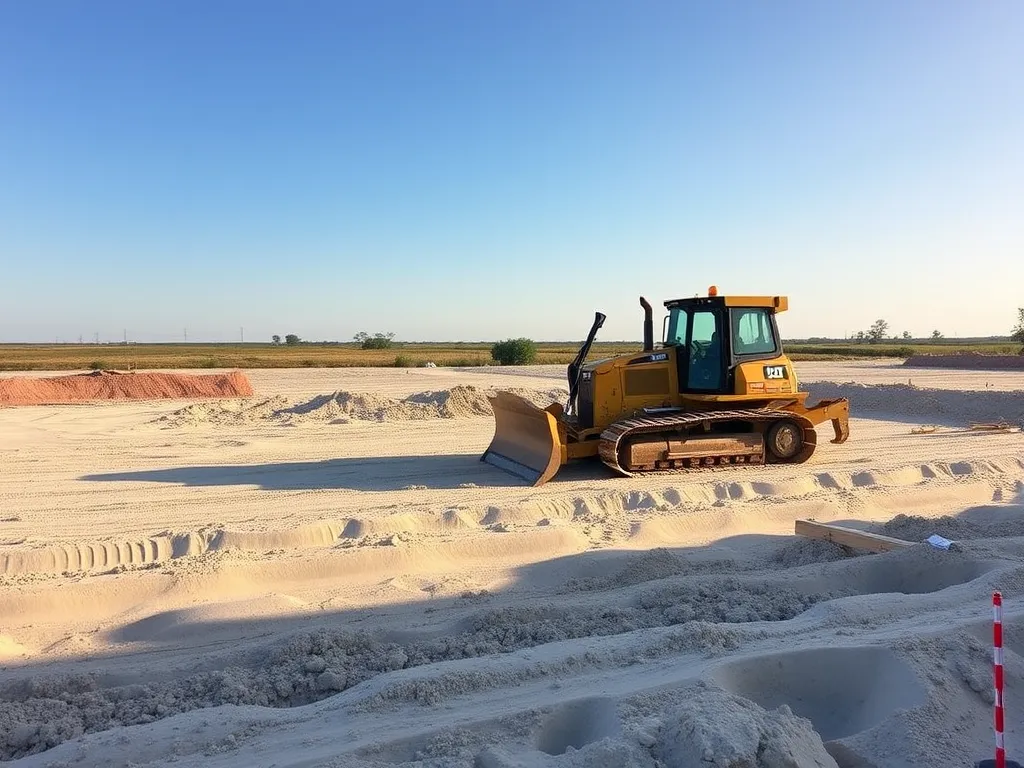
"Land clearing" and "grading" get used interchangeably, but they're two different jobs - and on most projects you need both, in a specific order. Land clearing removes everything sitting on top of your lot; grading reshapes the dirt underneath it. This guide explains what each one is, what each costs in Tampa Bay, and how to tell which one your project actually needs.
The Short Answer
- Land clearing removes what's on the land - trees, stumps, brush, and debris.
- Grading reshapes the ground itself - leveling it and setting the slope so water drains away.
- Order matters: you clear first, then grade. You can't grade a lot that's still full of trees and stumps.
- Most building lots need both. A lot you're only tidying up may need just clearing; an already-open lot that pools water may need just grading.
What Is Land Clearing?
Land clearing is the removal of everything growing on or covering your property so the ground is exposed and workable. On a Tampa Bay lot that typically means:
- Tree removal - trees of all sizes, including hazardous and dead trees
- Stump grinding - complete stump and root-system removal below grade level
- Vegetation clearing - brush, shrubs, and overgrowth
- Debris hauling - removal and disposal of all cleared material
In Tampa, land clearing runs about $2,000 - $6,000 per acre depending on vegetation density, soil, and access. A standard suburban lot (0.25 - 1 acre) with moderate vegetation typically lands at $3,500 - $7,500, smaller urban lots at $1,500 - $4,000, and commercial sites at $4,000 - $25,000+. One thing to plan for: Hillsborough County's tree ordinance means a permit is generally required to remove a protected tree of 12 inches DBH or larger on developed residential property, and over 5 inches DBH on a vacant lot. Our Tampa land clearing cost guide breaks the numbers down in full.
What Is Grading and Leveling?
Grading is the shaping of the exposed ground - moving dirt to create a level, stable surface that drains correctly. It's the step that decides whether water runs away from a structure or pools against it. A grading scope usually includes:
- Precision laser-guided grading for accurate, level surfaces
- Drainage slope installation so water moves away from structures
- Cut and fill operations - moving high ground into low spots, importing fill where needed
- Foundation preparation and leveling for construction-ready pads
- Slope stabilization and erosion control
- Final grade for landscaping, sod, or the next construction phase
Grading a standard residential lot in Tampa typically runs $1,000 - $5,000, with imported fill dirt usually the biggest variable on the invoice. Most residential grading takes 1 - 2 days; larger commercial sites run 1 - 2 weeks. It isn't optional on Florida's flat, high-water-table lots - building codes in Hillsborough and Pasco counties require proper drainage grading. See the full grading and leveling cost guide for details.
The Key Difference
The simplest way to keep them straight: land clearing deals with what's above the ground; grading deals with the ground itself. Clearing takes the trees, stumps, and brush away and hauls the debris off. Grading then takes the bare dirt that's left and reshapes it into a level, well-draining surface. They're sequential, not interchangeable - and that order is fixed. You cannot grade a lot that's still covered in trees and stumps, and grading a lot before it's cleared just buries the debris you'll have to dig back up.
Which One Do You Need?
Three common situations:
- Clearing only: an overgrown lot you want opened up or cleaned up - no building planned, and the existing ground already drains fine. You need the trees and brush gone, not the dirt reshaped.
- Grading only: a lot that's already open (or an existing lawn) that pools water, sits unevenly, or needs a level pad. Nothing to clear - it just needs the ground re-shaped and the drainage corrected.
- Both: a raw or wooded lot you're building on. Clear it first, then grade the exposed ground into a construction-ready pad with proper drainage. This is the most common path for new construction.
Why They're Usually Done Together - Clear First, Grade Second
On any lot headed for construction, clearing and grading are back-to-back stages of the same job: expose the ground, then shape it. Doing them together also tends to cost less. Bundling clearing with grading and drainage as one scope generally provides better overall value than hiring separate contractors for each - one mobilization, one crew, one coordinated plan for where the debris goes and where the water ends up. When you request a quote, it's worth asking for clearing and grading priced together rather than as two disconnected jobs.
Pro Tip: Don't Grade Before You Clear
The most expensive version of this work is the one that has to be redone. If a lot gets graded before every stump and root is out, the debris resurfaces and the grade has to be re-cut. Clear the lot completely first - trees, stumps, roots, and brush - then grade the clean, bare ground once. On a typical Tampa lot the grading itself is only 1 to 2 days; getting the clearing done right ahead of it is what keeps it a one-time job.