Land Clearing vs. Forestry Mulching: Which Is Right for Your Property?
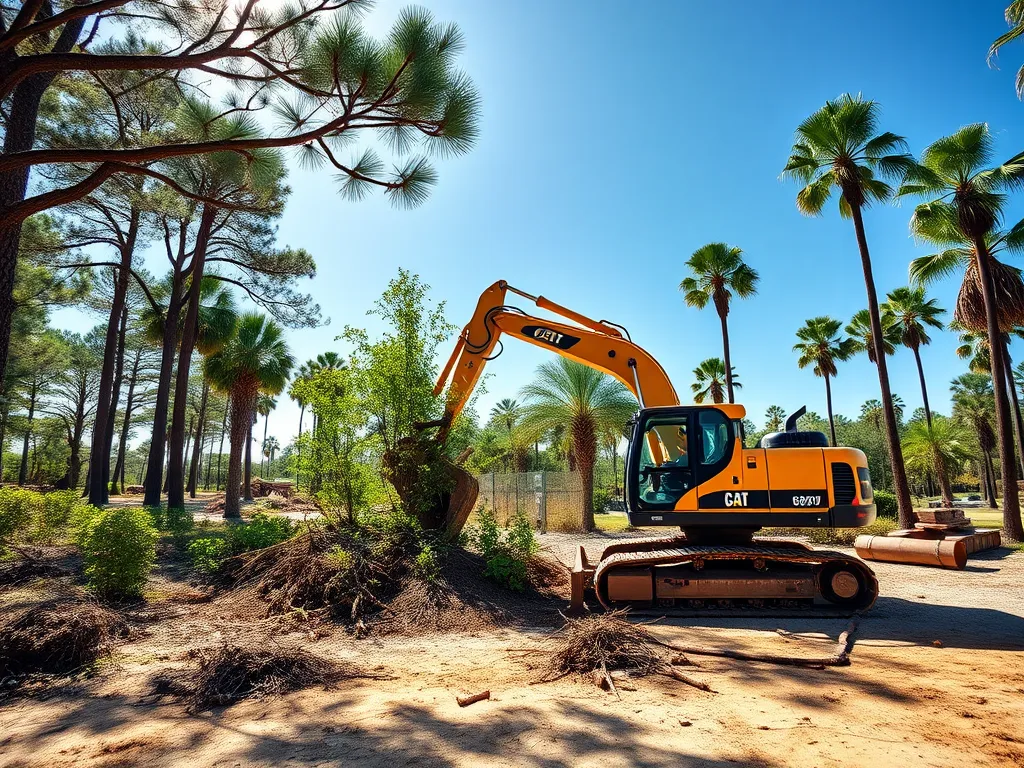
*Image is AI-generated for illustrative purposes and may not represent actual project results.
Choosing the right vegetation management method for your Florida property is crucial for both your budget and environmental impact. Traditional land clearing and forestry mulching are two distinct approaches with different benefits, costs, and applications. This comprehensive guide will help you understand when to use each method for optimal results on your property.
What is Traditional Land Clearing?
Traditional land clearing involves the complete removal of trees, stumps, brush, and vegetation from an area using heavy equipment like bulldozers, excavators, and chainsaws. This method creates a clean slate by physically removing all organic material from the site.
Traditional Land Clearing Process
- Tree felling: Large trees are cut down using chainsaws or mechanical shears
- Stump removal: Stumps are excavated or ground below grade
- Brush clearing: Smaller vegetation is cut and removed
- Debris disposal: All organic material is hauled off-site or burned (where permitted)
- Site grading: Final grading and soil preparation for intended use
Equipment Used in Traditional Clearing
- Bulldozers: Push over trees and move large amounts of material
- Excavators: Dig stumps and load debris for removal
- Chainsaws: Precision tree felling and sectioning
- Chippers: Process brush and small branches
- Dump trucks: Haul debris off-site
What is Forestry Mulching?
Forestry mulching is a land clearing method that uses specialized equipment to cut, grind, and mulch vegetation in place. Instead of removing organic material, forestry mulching converts trees and brush into beneficial mulch that remains on the property.
Forestry Mulching Process
- Site assessment: Identify trees to preserve and areas to clear
- Selective clearing: Forestry mulcher cuts through vegetation up to 8-10 inches diameter
- In-place mulching: Organic material is ground into fine mulch chips
- Mulch distribution: Natural mulch layer is spread evenly across the site
- Large tree handling: Trees over machine capacity are felled separately and processed
Forestry Mulching Equipment
- Track mulchers: High-powered machines with cutting heads that process vegetation
- Drum mulchers: Horizontal cutting drums for dense brush and small trees
- Disc mulchers: Vertical cutting discs for precision selective clearing
- Skid steer attachments: Smaller mulching heads for tight spaces
Comparing Methods: Pros and Cons
Traditional Land Clearing
Advantages:
- Complete site clearing for construction
- Removes all stumps and roots
- Allows immediate grading and development
- Best for large-scale commercial projects
- Creates clean slate for landscaping
- Faster completion for total clearing
Disadvantages:
- Higher cost due to disposal fees
- More soil disturbance and erosion risk
- Loss of beneficial organic matter
- Requires separate soil improvement
- More disruptive to existing ecosystems
- Generates more waste requiring disposal
Forestry Mulching
Advantages:
- Environmentally friendly approach
- Creates natural mulch for soil health
- Prevents erosion with organic ground cover
- Lower cost (no disposal fees)
- Selective clearing preserves desirable trees
- Improves soil moisture retention
Disadvantages:
- Cannot remove large trees or stumps
- Not suitable for immediate construction
- Mulch may need time to settle
- Limited to vegetation under 8-10 inches
- May require additional grading later
- Can create fire hazard in dry conditions
Cost Comparison: Land Clearing vs Forestry Mulching
Cost differences between methods can be significant, particularly when disposal fees and long-term site preparation are considered:
| Project Type | Traditional Clearing | Forestry Mulching | Savings |
|---|---|---|---|
| 1 Acre Light Brush | $3,000 - $4,500 | $2,000 - $3,000 | 25-35% |
| 1 Acre Moderate Trees | $4,500 - $7,000 | $3,500 - $5,000 | 20-30% |
| 1 Acre Dense Forest | $6,000 - $10,000 | $4,000 - $6,500 | 30-40% |
| Residential Lot (0.5 acre) | $2,500 - $5,000 | $1,800 - $3,500 | 20-30% |
Cost Factors Favoring Each Method
Traditional Clearing Cost Factors
- Higher upfront costs: Equipment, labor, disposal fees
- Disposal fees: $35-65 per ton for organic debris
- Hauling costs: Fuel and transportation to disposal sites
- Soil amendments: May need topsoil or organic matter added
Forestry Mulching Cost Factors
- Lower equipment costs: Single machine operation
- No disposal fees: All material stays on-site
- Reduced hauling: Only large trees require off-site disposal
- Soil benefits: Natural mulch improves soil health
Environmental Impact Comparison
Florida's unique ecosystem requires careful consideration of environmental impacts when choosing vegetation management methods:
Traditional Land Clearing Environmental Effects
- Soil disruption: Heavy equipment compaction and topsoil removal
- Erosion risk: Exposed soil vulnerable to Florida's heavy rains
- Habitat loss: Complete removal eliminates wildlife cover and food sources
- Waste generation: Organic material becomes landfill burden
- Carbon impact: Transportation and disposal increase carbon footprint
Forestry Mulching Environmental Benefits
- Soil protection: Mulch layer prevents erosion and retains moisture
- Selective preservation: Maintains desirable trees and mature specimens
- Wildlife habitat: Preserves edges and corridors for native species
- Organic matter cycling: Returns nutrients to soil naturally
- Carbon sequestration: Mulch decomposes gradually, storing carbon
Florida-Specific Environmental Considerations
Florida's sandy soils, intense rainfall, and frequent droughts make forestry mulching particularly beneficial. The organic mulch layer helps sandy soils retain moisture during dry periods while preventing erosion during heavy rains common in summer months.
Best Use Cases for Each Method
When to Choose Traditional Land Clearing
Ideal Projects for Traditional Clearing
- New construction sites: Foundation work requires complete clearing
- Commercial development: Shopping centers, office buildings, industrial sites
- Infrastructure projects: Roads, utilities, drainage systems
- Large tree removal: Trees over 10 inches diameter requiring stump removal
- Immediate use areas: Parking lots, driveways, building pads
- Contaminated sites: Areas requiring soil testing or remediation
When to Choose Forestry Mulching
Ideal Projects for Forestry Mulching
- Fire prevention: Creating defensible spaces around homes
- Invasive species control: Brazilian pepper, Australian pine removal
- Pasture reclamation: Converting overgrown areas to grazing land
- Trail maintenance: Hiking, biking, and equestrian trails
- Selective thinning: Improving forest health while preserving canopy
- Wetland edge management: Maintaining buffer zones around protected areas
- Property line clearing: Boundary maintenance without total clearing
Florida-Specific Applications
Florida's unique climate and vegetation patterns create specific scenarios where one method clearly outperforms the other:
Managing Florida's Native Vegetation
Palmetto and Scrub Oak Control
Florida's dense palmetto understory and scrub oak thickets are ideally suited for forestry mulching. These species regrow quickly when cut, but mulching creates a thick barrier that suppresses regrowth while preserving beneficial canopy trees.
Pine Flatwoods Management
In pine flatwoods ecosystems common throughout central Florida, forestry mulching can selectively remove invasive hardwoods while preserving native pines, maintaining the natural fire-adapted ecosystem structure.
Invasive Species Control
Brazilian Pepper Eradication
Brazilian pepper, one of Florida's most problematic invasive plants, responds well to forestry mulching. The grinding action destroys the root system more effectively than cutting, and the resulting mulch helps suppress regrowth from seeds.
Melaleuca and Australian Pine
Large stands of invasive melaleuca and Australian pine may require traditional clearing for complete removal, especially in wetland areas where chemical treatment isn't suitable. However, smaller infestations can be effectively managed with forestry mulching.
Coastal and Wetland Considerations
Properties near Tampa Bay's coastline or inland wetlands face special requirements:
- Erosion prevention: Forestry mulching provides immediate ground cover in erosion-prone sandy soils
- Saltwater tolerance: Preserving salt-tolerant native trees while removing invasive species
- Storm surge protection: Maintaining natural barriers while improving access and safety
- Buffer zone maintenance: Meeting regulatory requirements for wetland buffers
Timeline Considerations
Project timelines vary significantly between methods and can influence your choice based on schedule requirements:
Traditional Clearing Timeline
- Planning phase: 1-2 weeks (permits, surveys)
- Clearing work: 1-5 days per acre
- Debris removal: 2-7 days (weather dependent)
- Site preparation: 1-3 days additional
- Ready for construction: Immediately after completion
Forestry Mulching Timeline
- Planning phase: 1-2 weeks (minimal permits)
- Mulching work: 0.5-2 days per acre
- Large tree removal: Additional 1-2 days if needed
- Mulch settling: 2-4 weeks for stabilization
- Ready for use: Immediate for trails, pasture
Combination Approaches
Many projects benefit from combining both methods to optimize results and costs:
Hybrid Project Examples
Residential Development
Approach: Traditional clearing for building envelopes and infrastructure, forestry mulching for preserved areas and buffers
Benefits: Reduces costs while meeting construction requirements and environmental compliance
Farm or Ranch Property
Approach: Forestry mulching for pasture reclamation, traditional clearing for barn sites and access roads
Benefits: Creates productive pasture land while providing cleared areas for infrastructure
Commercial Site with Preservation
Approach: Traditional clearing for development areas, forestry mulching for required preservation zones
Benefits: Meets development needs while satisfying environmental preservation requirements
Choosing the Right Contractor
Whether you choose traditional clearing, forestry mulching, or a combination approach, selecting an experienced contractor is crucial for success:
Contractor Qualifications to Verify
- Equipment expertise: Experience with both clearing methods and appropriate equipment
- Environmental knowledge: Understanding of Florida regulations and permit requirements
- Species identification: Ability to identify protected plants and invasive species
- Soil conditions: Experience with Florida's diverse soil types and drainage
- Insurance coverage: Adequate liability and equipment coverage
Questions to Ask Potential Contractors
- What method do you recommend for my specific property and goals?
- Can you provide examples of similar projects in my area?
- How do you handle protected trees and environmental compliance?
- What is your timeline and how does weather affect scheduling?
- Do you provide follow-up services for erosion control or regrowth management?
Expert Land Clearing Consultation
Tampa Land Prep specializes in both traditional land clearing and forestry mulching throughout the Tampa Bay area. Our experienced team can help you choose the best approach for your property, budget, and timeline while ensuring full environmental compliance.
Get Professional ConsultationMaking the Right Choice for Your Property
The decision between land clearing and forestry mulching depends on your specific situation, budget, and goals. Consider these final factors:
Decision Matrix
| Factor | Traditional Clearing | Forestry Mulching |
|---|---|---|
| Construction readiness | Excellent | Poor |
| Environmental impact | Higher impact | Lower impact |
| Cost efficiency | Higher cost | Lower cost |
| Large tree handling | Excellent | Limited |
| Soil health | Reduced | Improved |
| Selective preservation | Difficult | Excellent |
The best approach often combines elements of both methods, tailored to your specific property conditions and long-term goals. Professional consultation can help you optimize your investment while achieving the desired results for your land.